
Stated · Vigil assessment
Objectives
What the 9 actors this module authors a posture for are trying to achieve — stated positions and Vigil’s assessments, kept apart. Every other party appears under Profiles without one.
Collective defenceMilitary mobilityDefence industryHybrid pressureDeterrenceMaritime
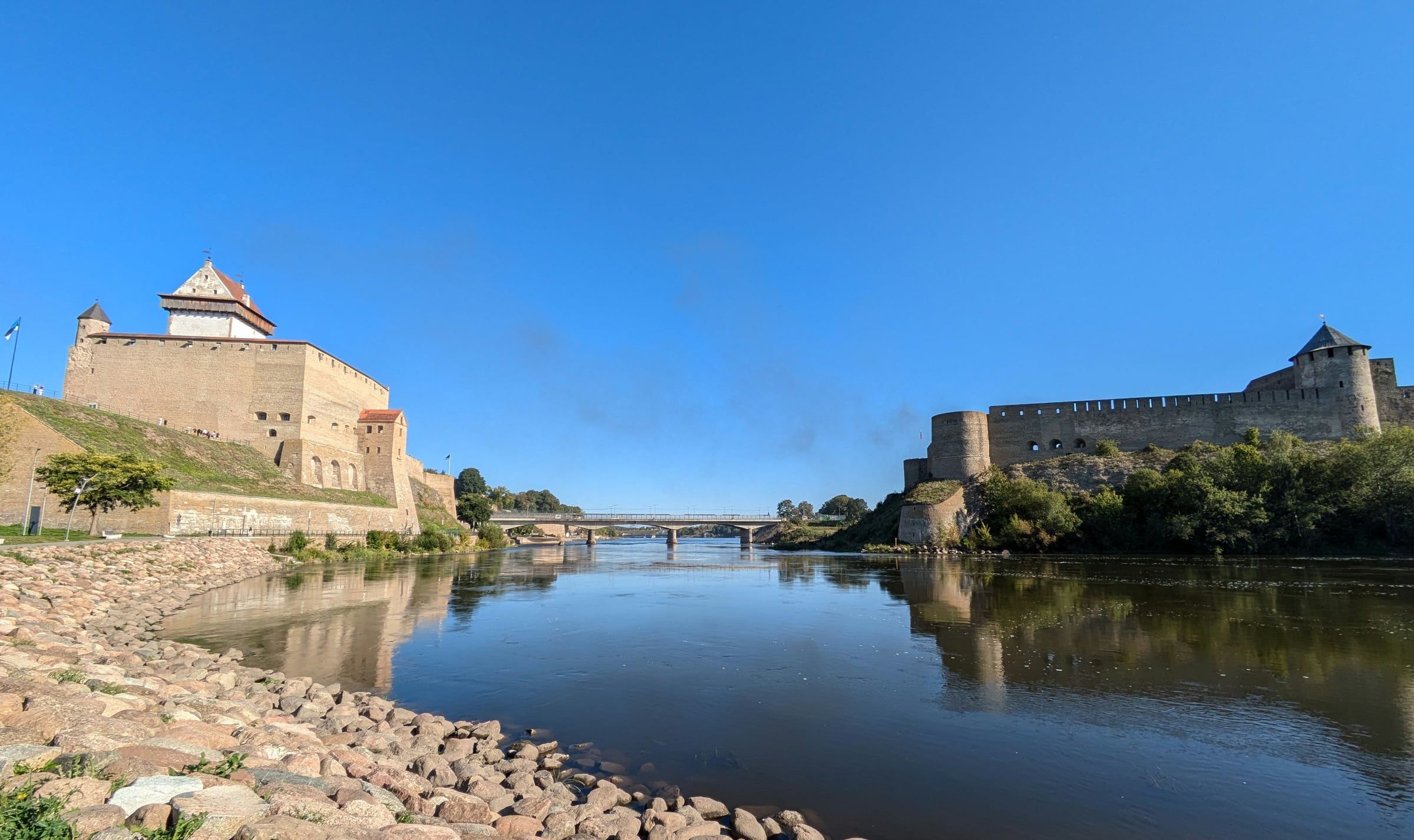
Narva, 6 September 2024, from the Estonian bank. Across the Narva River — here the border, and the Alliance's eastern edge — stands Ivangorod Fortress in Russia; Narva's own Hermann Castle is on the left, and the bridge in the middle distance is the town's crossing point.Vicky Brock / Flickr · CC BY-SA 2.0 · resizedImage: A calm river running away from the camera between two medieval stone fortresses on opposite banks, a square castle with a tower on the left and long walls with round towers on the right, with a road bridge across the water in the distance under a clear sky.
Current state
Graded per item · As of 2026-09-20
NATO's eastern flank is not a war and is not a front line. It is a standing defence system stretched across a thousand miles of very different ground — Arctic tundra, a forested Finnish frontier, three small Baltic states, the Polish plain, the Carpathians and the western Black Sea — held together by an alliance whose forces remain under national command until the moment they are not. What moves in that system is rarely combat. It is battlegroups rotating, aircraft scrambling to meet something that crossed a border, cables breaking on the seabed, ammunition contracts being signed and not yet delivered, rail gauges that do not match, and thirty-two governments agreeing or failing to agree. Vigil's coverage explains how that system is built and where its joints are — never how an attack on it would be conducted or resisted.
Counts cover this module’s mapped places, events, zones, campaigns, terrain, corridors, impact chains and actor profiles. A country count is what is specifically about that country; it is not the whole of what bears on it.
And by arena
Nordic and High NorthBaltic states and Baltic SeaPoland, Belarus and KaliningradCentral flankBlack SeaReinforcement depthAlliance command and decisionHybrid pressure and the information environment
Two dimensions, deliberately not the same one. An arena is the mechanism a record belongs to; a country is whose territory it concerns. Naming the arenas after the three states would have rebuilt three national modules inside one, and lost the cross-border explanation this module exists for.
Why it matters
A defence system is only as real as the things it can actually do under pressure, and those things are separable: detect what is happening, decide in time, mobilise the forces, move them to where they are needed, fight, sustain the fight, and stay politically coherent while doing it. Each is a different problem with a different bottleneck, and each is documented in public — in treaties and command arrangements, in rail and bridge capacity, in ammunition orders, in parliamentary votes and national caveats. This module holds those documents in one place so the question can be examined rather than argued about. It is not a prediction, a readiness score or an assessment of whether the alliance would hold.
Stated · Vigil assessment
What the 9 actors this module authors a posture for are trying to achieve — stated positions and Vigil’s assessments, kept apart. Every other party appears under Profiles without one.
Vigil assessment
What limits those options. A constraint is a structural limit, not a risk rating.
Vigil assessment · Observed
The module’s current phase — Contested airspace and continuous vigilance (September 2025 – present) — and the newest dated review.
Vigil assessment
The standing arrangements this module authors between its parties. Each line is the record’s own signature; the analysis, dates and sources are on the record.
Observed
The standing questions Vigil is following on this module, each with what its latest review found. The evidence that would change the assessment is on the question.
Vigil assessment · Observed
6 exposure channels and 3 watch items, as of 2026-09-22.
Vigil assessment · Observed
4 dated figures at regional granularity, each with its own basis, as of 2026-09-22. No operational detail is published.
A week in which the allied answer in the western Black Sea gained names and channels, while the strikes it watches went on. Romania published the first allied patrol asset with a stated tasking: a French Atlantique 2, sent at Romania's request under national French command from 18 October to 6 November. On 28 October Bulgaria, Romania and Türkiye agreed a trilateral coordination mechanism in Sofia. While they met, sea drones struck a ninth merchant ship off Bulgaria; all 18 crew were rescued and no attacker is named. None of this is a standing naval deployment or air defence. On the evening of 31 October Romania stated that two drones had entered its north-east. This was its first published entry in two weeks, and one drone was last seen inside the country.
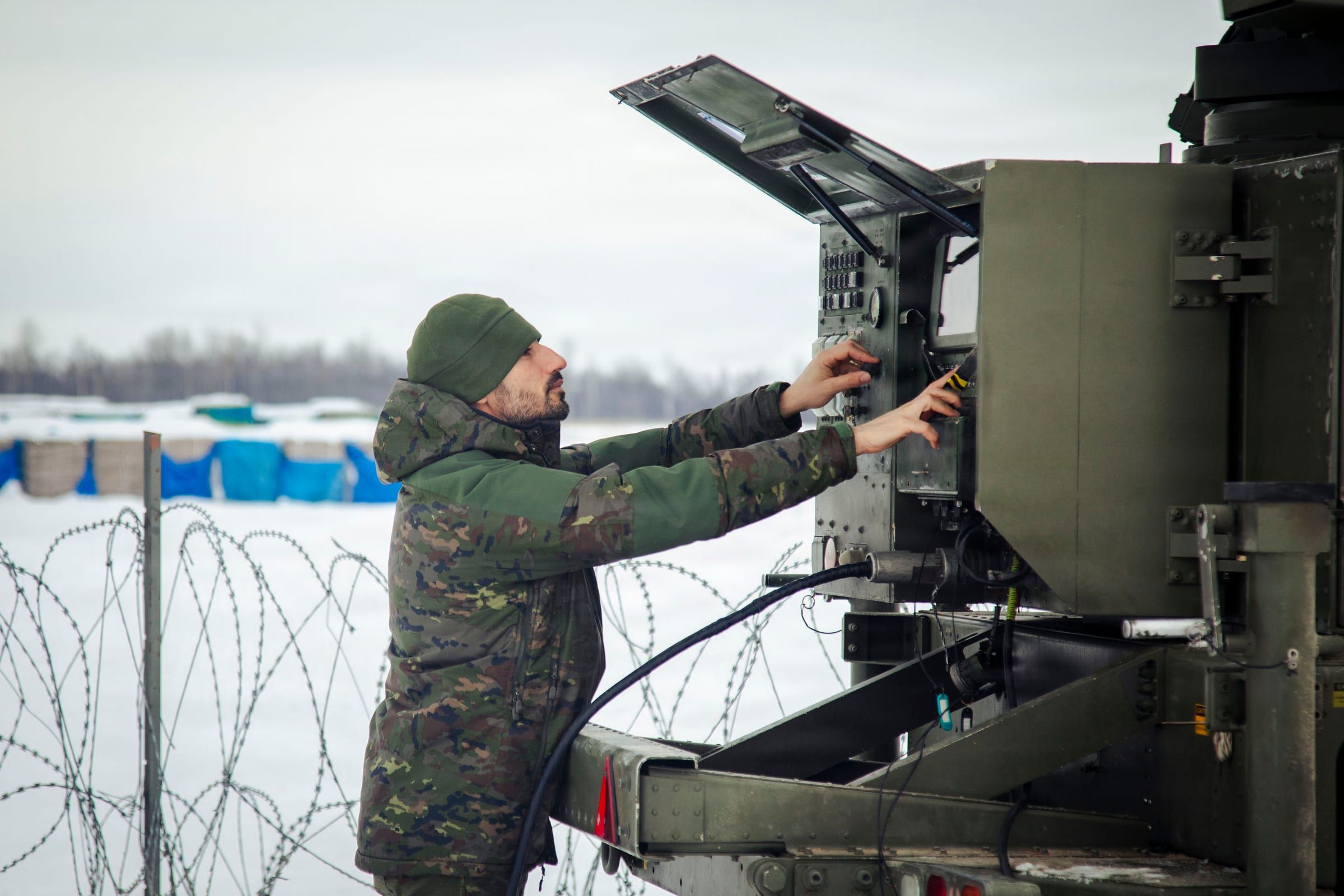
On 1 August 2026 the fighters that had policed Baltic airspace since 2004 began flying an air defence mission against drones and cruise missiles as well as aircraft. NATO changed the mandate and the authority to engage. The ground-based and counter-drone layers that make air defence more than fighters are mostly national, at very different stages — and NATO does not say which of them serve the mission.
Changed in brief — 2026-11-01 · Map updated
Every zone in this module is either a broad SEA APPROACH or a band drawn purely to explain geography. Nothing here shades who holds ground, and the vocabulary structurally cannot: there is no occupied, contested, control, activity or corridor category in this module. No shading depicts unit positions, defensive lines, reinforcement routes, patrol areas or any assessed axis of attack — a defence system is not drawn as a war map, and the fighting in Ukraine belongs to the module that covers it.
Beside the Watch question on integrated air and missile defence depth. The baseline at 1 October 2026 is that only one allied ground-based unit in the Baltic states — Spain's NASAMS in Latvia — is described by its owner as integrated into NATO's air defence network. What would count is a NATO or national statement that a named system at a named force serves the mission. A contract, a delivery or a renamed mission is not that.
Beside the Watch question on industrial delivery. The module keeps announcements, contracts, deliveries and fielding apart on its equipment and industry records — the K2 second batch, the K9 for Finland, the Type 212CD, Poland's counter-drone system. What would count is a receiving ministry stating a delivery or a fielding; a manufacturer's target is recorded as a target.
Beside the Watch question on reinforcement mobility. Since 22 September 2026 the main line's operating date rests on the 2028–2034 EU budget and on at least 10 billion euros the three Baltic governments said they would seek. What would count is a funding decision in that budget; a national section date is a schedule, not money.
Scope of this coverage. Coverage of Russia and Belarus in this module is NATO-facing and structural only, at the level allied governments and NATO themselves describe publicly. The war in Ukraine is covered by the Ukraine–Russia module, which owns every record about it; this module links to that one and never duplicates it. Command relationships are recorded at the level a source states and are never rounded upward; where no source states one, the record says the relationship is unknown rather than assuming it. Force Atlas branch depth reflects what each state publishes, not the size or importance of its forces.
Source registryMethodology Corrections logGlossary
Found an error in NATO Eastern Flank coverage? Corrections are logged in public with the date and what changed — see the corrections log.